
Amidst the global wave of smart manufacturing, the electronics industry faces increasingly stringent demands for production efficiency, quality control, and supply chain collaboration. As a critical device in the Industrial Internet of Things (IIoT), industrial tablet RFID handheld PDAs are revolutionizing PCB (Printed Circuit Board) production through non-contact data capture, high-precision identification, and flexible deployment. This guide comprehensively analyzes the core functionalities of these devices and their practical applications across PCB manufacturing workflows.
I. Precision Data Collection Hub for PCB Production
Dual-Mode RFID Identification Engine
Equipped with ISO 15693/ISO 18000-6C compliant modules, these PDAs support both HF (13.56MHz) and UHF (860-960MHz) frequencies. During PCB incoming inspection, they penetrate packaging to batch-read supplier data, lot numbers, and impedance parameters—boosting warehouse registration efficiency by 300% compared to barcode scanning.
Dynamic Anti-Metal Interference Algorithm
Proprietary algorithms automatically adjust transmission power to overcome electromagnetic noise from metal fixtures. In SMT workshops, operators reliably scan RFID tags through 0.5mm stainless steel stencils to capture critical parameters like aperture dimensions.
Multi-Tag Anti-Collision Technology
Utilizing TDMA (Time Division Multiple Access) protocols, PDAs achieve 200-300 tags/second recognition. Quality inspectors verify stacked PCB batches against MES requirements, reducing testing errors to below 0.01%.
II. Real-Time Production Command Terminal
Edge Computing Capabilities
With octa-core ARM processors and 8GB RAM, devices perform local data validation. When impedance values exceed thresholds, PDAs trigger alarms and send stop commands via Wi-Fi 6—preventing batch defects at source.
Industrial-Grade Durability
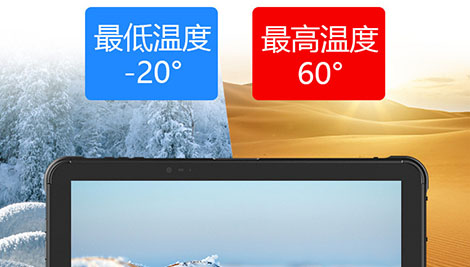
Featuring IP65-rated housings with anti-ESD coatings, PDAs operate in -20°C to 60°C environments. Operators wearing high-temperature gloves can smoothly control 8-inch touchscreens during wave soldering. Devices withstand 1.5m drops with under 0.1% performance degradation.
Multi-Modal Interaction
Voice commands enable hands-free operation in cleanrooms. Technicians configure AOI equipment parameters via pre-set scripts without screen contact.
III. Full-Process Traceability System
Automated Production Records
Integrated UWB positioning (±30cm accuracy) tracks PCB movement through etching/drilling/plating stages. Quality engineers replay timelines to pinpoint failure points across 12 parameters including operator IDs and environmental data.
Smart Material Replenishment
ERP-integrated PDAs monitor consumables in real-time. When prepreg (PP) stocks dip below safety levels during lamination, devices auto-generate purchase requests and optimal delivery routes—reducing line stoppages by 85%.
Visualized Energy Management
Hall sensors detect equipment current fluctuations. Combined with RFID-logged runtime data, PDAs generate per-unit energy profiles. One PCB factory saved ¥1.2M annually by identifying abnormal consumption peaks in aging machinery.
IV. Scalable IIoT Gateway
Open Interface Platform
USB 3.0/RS232/Ethernet ports with Modbus TCP/OPC UA support enable custom integrations. One manufacturer connected PDAs to robotic arms for automated PCB loading—increasing equipment utilization from 68% to 92%.
Collaborative Device Networking
Over private 5G networks, PDAs form mobile data-collection clusters. Critical alerts detected by one unit instantly broadcast to terminals within 50m, enabling rapid coordinated response.
Conclusion
Industrial RFID PDAs have evolved from data collectors into neural endpoints bridging physical processes and digital twins. By enhancing identification accuracy, computing power, and industrial adaptability, they redefine quality control paradigms—enabling transparent factories and flexible manufacturing. Ongoing advancements in materials science and chip technology will drive further miniaturization, power efficiency, and environmental resilience, unlocking deeper IIoT value.