
In the field of medical waste management, achieving end-to-end traceability from generation to disposal has become a core challenge in the industry's digital transformation. Traditional methods relying on manual registration and paper records face pain points such as data delays, high error rates, and regulatory blind spots. Android-based customized RFID handheld terminals provide an intelligent solution through deep integration of IoT technology with medical scenarios. This article analyzes how Android RFID handheld PDAs build a traceable medical waste management system from three perspectives: technical principles, core functions, and application scenarios.
I. Technical Foundation: Synergistic Advantages of Android and RFID
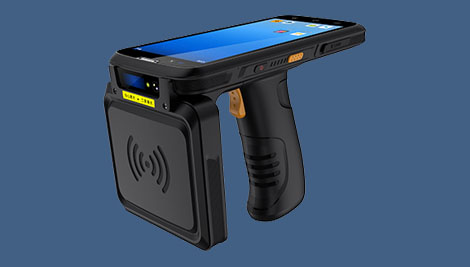
As the world's most widely used mobile OS, Android offers natural advantages with its openness, compatibility, and ecosystem integrity. Through customization, Android PDAs integrate high-precision RFID modules, 4G/5G communication, GPS positioning, and industrial-grade protection.
RFID technology enables contactless data exchange for rapid identification and information binding of medical waste packages. Compared to barcodes' limitations (susceptibility to contamination, short scanning range), UHF RFID tags feature strong penetration, long read ranges (3-25 meters), and multi-tag simultaneous reading – ideal for complex collection and transfer scenarios.
II. Core Functions: Building a Lifecycle Traceability Chain
1. Waste Generation: Smart Packaging & Data Binding
At source points (wards, operating rooms), medical staff scan RFID tags via Android PDAs to automatically record waste category (infectious/sharp/pathological), weight, department, and time. Voice commands and shortcut keys ensure efficiency even when wearing protective gear. The system generates unique traceability codes bound to RFID tags for "one-item-one-code" management.
2. In-Hospital Transfer: Route Monitoring & Anomaly Alerts
Transfer personnel conduct batch scans of collection bins. The PDA compares preset routes with actual trajectories in real-time. Deviations or abnormal stops trigger instant alerts pushed to management platforms via 4G. Geo-fencing prevents unauthorized tampering during transit.
3. Temporary Storage: Contactless Verification
In storage areas, UHF RFID enables simultaneous reading of multiple tags within 25 meters, completing bulk inventory checks in 3 seconds. The system validates category/weight consistency with transfer documents. Accuracy reaches 99.9%, reducing verification time from 30 minutes to under 1 minute.
4. Disposal Handover: Closed-Loop Data Tracking
Upon disposal, scanning vehicle RFID tags automatically links driver credentials and disposal facility licenses. Electronic manifests sync with environmental regulatory platforms. Scanning at disposal sites traces full lifecycle data, complying with 3-year record retention requirements under Medical Waste Management Regulations.
III. Medical-Specific Enhancements
1. Healthcare-Grade Design
IP65 rating withstands alcohol/chlorine disinfectants
Glove-compatible touchscreen
12-hour battery for continuous operation
2. Multi-Modal Data Collection
Integrated HD camera documents package damage
Electronic scale interface auto-links weight data
Bluetooth printers generate traceable handover documents
3. Role-Based Access Control
Four-tier permissions (doctors, nurses, transporters, admins) prevent data tampering. Example: clinicians cannot modify weight records; transporters can't alter handover times.
4. Data Analytics Dashboard
Real-time cloud data generates heat maps, departmental efficiency rankings, and anomaly trend analysis. Management accesses visual reports via PC/mobile for decision-making.
IV. Value Transformation: Compliance to Efficiency
Android RFID PDAs drive three paradigm shifts:
Manual→Smart: 80% faster data entry, <0.1% error rate
Result→Process Tracking: Real-time location/route playback extends oversight
Isolated→Ecosystem: Breaks data silos across hospitals/transporters/disposal units
One hospital pilot achieved:
Waste loss rate dropped from 0.7% to 0.01%
Annual labor savings: ¥200,000+ (2 staff reduced)
80% faster emergency response during leakage incidents
V. Future Outlook: Technology Convergence
With 5G and edge computing, future PDAs will integrate:
Visual modules for automatic damage detection
Blockchain for immutable audit trails
Core focus remains building safer, more efficient, and transparent traceability systems amid tightening global medical waste regulations.
Android RFID handheld PDAs enable regulatory compliance while elevating public health safety through digital transformation – a pivotal step toward smart healthcare infrastructure.