
In the era of rapid smart manufacturing and customized production, 3D printing has become indispensable in industries like manufacturing, healthcare, and aerospace. However, as applications grow more complex, precise material batch management and reliable product traceability have emerged as critical challenges. Handheld PDA devices offer a comprehensive solution through portability, efficient data capture, and real-time interaction. This article explores how PDAs enhance material batch control, production monitoring, and end-to-end traceability to reshape digital management in 3D printing.
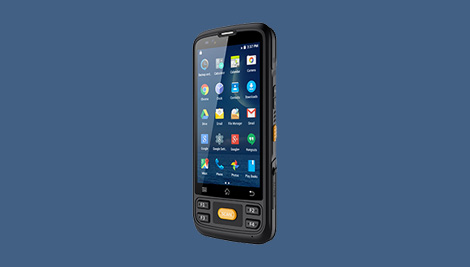
I. Precision Material Batch Management: End-to-End Control
Variations in material properties (e.g., particle size, chemical composition) directly impact product quality. Traditional manual tracking causes delays and errors. Handheld PDAs address this via:
Multi-mode Data Capture: Scan GS1 codes or manually log material specs via templates, syncing real-time to cloud systems.
Dynamic Inventory Alerts: RFID-enabled batch scanning triggers FIFO workflows and expiration warnings.
Environmental Monitoring: Integrated sensors detect temperature/humidity anomalies, triggering alerts.
II. Production Process Visibility: Real-Time Parameter Control
PDAs enable "digital twin" oversight for layer-by-layer quality:
Device Interconnectivity: Push print parameters (layer thickness, speed) to printers via Bluetooth/Wi-Fi; flag deviations instantly.
Quality Checkpoints: Scan device QR codes at critical stages (e.g., substrate calibration) to validate measurements.
Equipment Health Monitoring: Vibration/current sensors predict nozzle clogs or wear to prevent downtime.
III. Product Traceability: Bidirectional Data Tracking
PDAs establish full-chain transparency:
Unique ID Tagging: Apply encrypted QR/RFID tags at production exit, linking batches, timestamps, and QC reports.
Forward/Reverse Tracing: Track defective products to source materials or isolate affected batches for recalls.
Blockchain Integration (Optional): Immutably store key data (e.g., inspection reports) on distributed ledgers.
IV. Key Advantages of Handheld PDAs in 3D Printing
Offline Operation: Local data storage with auto-sync when networks resume.
Rugged Design: IP65 rating, drop resistance, and 12-hour battery for harsh environments.
Role-Based UI: Customizable interfaces limit errors (e.g., edit rights for supervisors only).
Conclusion
Handheld PDAs empower 3D printing with lifecycle management from materials to end products, driving efficiency, cost reduction, and accountable smart manufacturing. As technology evolves, they will catalyze further digital transformation in the industry.