
As agricultural mechanization accelerates, refined maintenance of farming equipment has become crucial for enhancing productivity. Serving as the core support for agricultural machinery manufacturing and after-sales systems, parts lifecycle management directly impacts equipment reliability, operational costs, and user experience. PDA handheld barcode scanners, with their portability, high-precision data capture, and real-time synchronization capabilities, are transforming end-to-end management from warehousing to decommissioning. This article analyzes their innovative applications in agricultural machinery parts management.
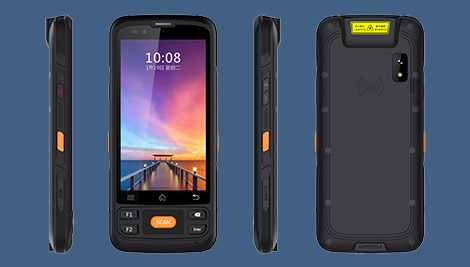
I. Core Challenges in Agricultural Machinery Parts Lifecycle Management
Agricultural equipment typically comprises thousands of components across complex systems like engines, transmissions, and hydraulic units. Traditional management faces three key issues:
1.Information Fragmentation: Lack of digital tracking from procurement to maintenance causes simultaneous stockpile shortages and overages.
2.Response Delays: Manual fault tracing extends repair cycles with high error rates.
3.Cost Overruns: Absence of lifecycle data hinders predictive maintenance planning.
PDA scanners address these by establishing a "One-Item-One-Code" digital identity system, enabling real-time physical-digital mapping.
II. Functional Modules of PDA Handheld Scanners
1. Multi-Scenario Data Capture
Adapting to barcodes, QR codes, and RFID tags on metal castings, rubber seals, and sensors, PDA scanners maintain 99.9% accuracy in oily/vibratory environments.
Applications:
Warehouse receiving: Auto-verify shipments against purchase orders
Assembly lines: Integrate with MES systems to prevent installation errors
2. Dynamic Inventory Control
Real-time WMS synchronization enables:
30-second inventory updates
AI-driven replenishment based on seasonal demand
Storage optimization using ABC analysis
3. Full-Chain Quality Traceability
During equipment failures:
Forward tracing: Retrieve full production QC records
Backward tracing: Identify batch-wide risks via serial numbers
Accountability tracking: Log operator IDs/timestamps for audits
4. Predictive Maintenance
IoT-integrated functions:
Usage-hour tracking with replacement alerts
Vibration/temperature-based wear prediction
Automated repair guides and part lists
5. Reverse Logistics Support
For recycling/refurbishment:
Residual value assessment via historical data
Optimal channel recommendations (remanufacturing vs. recycling)
Carbon footprint tracking for ESG reporting
III. Operational Efficiency Gains
60% faster inbound/outbound processing
40% higher inventory turnover
50% reduction in equipment downtime
IV. Future Tech Integration
Offline operation capabilities
Voice/gesture controls for harsh environments
ERP/CRM API ecosystems
Conclusion
PDA scanners have evolved from data collectors to digital-physical nexus points in agriculture. By deepening their lifecycle management functionalities, manufacturers build resilient supply chains for smart farming.