
With the accelerated advancement of smart grid construction, the electricity industry demands higher efficiency, accuracy, and intelligence in meter reading operations. Traditional manual methods suffer from low efficiency, error-prone data, and high management costs. The emergence of UHF RFID (Ultra-High Frequency Radio Frequency Identification) handheld PDAs offers an innovative solution. This article delves into the core value of UHF RFID handheld PDAs in electricity meter reading from a functional perspective, exploring how their technological advantages reshape industry workflows.
I. Technical Features and Core Functions of UHF RFID Handheld PDAs
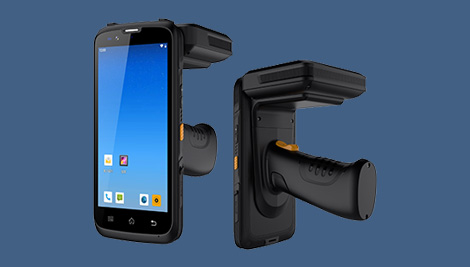
UHF RFID handheld PDAs integrate ultra-high-frequency RFID technology into portable data collection devices, operating in the 860MHz-960MHz band. They enable long-range, rapid multi-tag reading. Key functions for electricity meter reading include:
High-Speed Batch Reading for Enhanced Efficiency
Unlike slow barcode scanning or manual entry, UHF RFID PDAs support non-contact batch reading, identifying dozens of meter tags within tens of meters at speeds of 200-300 tags per second. For example, in residential complexes, workers can collect entire building data by moving the device along corridors or meter clusters, increasing daily coverage by 5x.
High-Precision Data Collection to Eliminate Errors
Automatic binding of unique meter IDs ensures data accuracy. Built-in anti-interference algorithms filter noise from metal obstructions or electromagnetic fields, achieving 99.9% read accuracy. Offline storage and online synchronization prevent data loss in low-signal areas.
Real-Time Data Exchange for Smart Management
Equipped with 4G/5G, Wi-Fi, and Bluetooth, PDAs transmit data instantly to power management systems. Readings generate electronic work orders, triggering alerts for anomalies (e.g., usage spikes or faults). One utility reduced anomaly detection time from 72 hours to under 2 hours, lowering line loss rates.
Industrial-Grade Durability for Harsh Environments
Designed for basements, outdoor cabinets, and extreme conditions, these PDAs feature IP65 dust/water resistance, 1.5-meter drop resistance, glove/wet-touch screens, and 10+ hour battery life. Some models include low-temperature heating for stable operation at -20°C.
Flexible Expansion Interfaces for Versatile Applications
USB, RS232, and HDMI ports allow connectivity to printers, scanners, or ID readers. For instance, field staff can verify user identities or print payment notices on-site, transforming the PDA into a multifunctional terminal.
Data Security and Permission Controls
AES encryption and dynamic authentication protect sensitive data. Role-based access (e.g., reader, auditor, admin) and automated logging ensure full traceability.
II. Scenario-Based Applications in Electricity Meter Reading
Urban Residential Areas
Long-range reading in high-rises eliminates door-to-door visits. With building navigation features, workers cover 300+ households daily, reducing complaints by 80%.
Industrial Park Management
Scheduled inspections and preset routes enable real-time usage analysis. A steel plant cut billing cycles from 7 days to 1, saving ¥500,000/year.
Remote Areas
Offline caching stores thousands of entries, while Beidou RDSS support (on select models) enables data transmission without public networks.
Emergency Repairs & Temporary Supply
PDAs read backup tags during meter damage, enabling "meter-less reading." For temporary supply, dynamic coding allows instant activation.
III. Value Transformation for the Power Industry
Cost Efficiency: From Labor-Driven to Tech-Driven
One PDA replaces 3–5 manual readers, saving ¥200,000+ annually, with ROI within a year.
Data Empowerment: From Recording to Process Control
Spatiotemporal data aids in theft detection, line loss analysis, and load forecasting. One provincial utility recovered ¥10M+ in stolen electricity annually.
Service Upgrade: From Reactive to Proactive
Real-time analytics predict demand (e.g., adjusting transformer loads before summer peaks), preventing outages and boosting satisfaction.
IV. Future Outlook: Integration with Power IoT
Advances in 5G and edge computing will evolve PDAs into smart terminals. Examples include LPWAN-enabled real-time edge processing or blockchain-based energy trading platforms, unlocking further potential.
Conclusion
UHF RFID handheld PDAs are revolutionizing electricity meter reading with efficiency, precision, and resilience. From cities to remote villages, routine checks to emergencies, their benefits translate into tangible industry gains. As technology evolves, these devices will become indispensable "data probes" for smart grid development, underpinning the sector’s digital transformation.