
In the electronic components industry chain, traceability management is a critical link to ensure product quality, enhance supply chain efficiency, and prevent counterfeit products. With the in-depth development of Internet of Things (IoT) technology, high-frequency RFID (Radio Frequency Identification) handheld devices have become core tools in electronic component traceability scenarios, leveraging their non-contact identification, efficient data collection, and strong environmental adaptability. This article starts from technical principles to deeply analyze the functional characteristics and application value of high-frequency RFID handheld PDAs in electronic component traceability, providing the industry with actionable technical solution references.
I. High-Frequency RFID Technology Fundamentals and Core Advantages of Handheld Devices
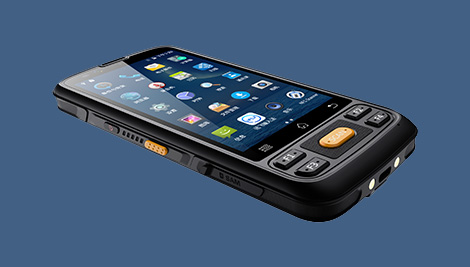
High-frequency RFID technology operates in the 13.56MHz frequency band, with strong electromagnetic wave penetration and excellent anti-interference capabilities, making it particularly suitable for object identification in complex environments like metals and liquids. Compared to low-frequency RFID, high-frequency technology offers faster transmission rates and larger data capacities; compared to ultra-high-frequency RFID, its near-field coupling characteristics are more suitable for precise reading of dense, small tags. As a mobile terminal device, the high-frequency RFID handheld PDA integrates radio frequency modules, antenna systems, data processing units, and human-machine interfaces, with core advantages including:
Precise Positioning and Rapid Identification: Through optimized antenna design and signal processing algorithms, even in densely stacked component warehouse environments, it quickly penetrates packaging materials to batch-read labels. A single scan can capture dozens of tag pieces of information, improving efficiency by over 5 times compared to traditional barcode scanning.
Multi-Tag Anti-Collision Processing: Built-in dynamic time-division multiple access (TDMA) protocols support simultaneous processing of multiple tag response signals. Through intelligent sequencing and collision avoidance mechanisms, it ensures data integrity and accuracy in high-speed mobile scanning scenarios, avoiding issues like missed reads or duplicates.
Offline Storage and Online Synchronization Dual Modes: The device features large-capacity storage chips, allowing data collection to be saved locally in offline environments and automatically synchronized to cloud management systems when the network is restored. This design ensures continuous data collection while reducing dependence on on-site network conditions.
II. Deepened Functional Applications in Electronic Component Traceability Scenarios
Electronic components are characterized by small size, high value, and long life cycles, with traceability needs spanning the entire chain from raw material procurement, production processing, warehousing logistics, to after-sales maintenance. Through customized development of functional modules, high-frequency RFID handheld PDAs can deeply adapt to the following scenarios:
Warehousing Management: Automated Acceptance and Inventory Initialization
Function Implementation: By scanning RFID pallet tags provided by suppliers using the handheld device, the system automatically verifies purchase order information, including quantity, specifications, and batch numbers. For bulk components, it can pair with desktop readers for rapid writing and binding of individual tags.
Value Demonstration: Reduces traditional manual acceptance time from 2 hours to 15 minutes, lowers error rates from 3% to below 0.1%, and establishes unique identity profiles for components, providing foundational data support for subsequent traceability.
Production Line Traceability: Key Process Data Binding
Function Implementation: Fixed RFID readers are deployed at stations like SMT placement, wave soldering, and testing, with handheld devices serving as mobile supplements for re-inspection of abnormal parts or temporary station data collection. By integrating with MES systems, they record real-time information such as component feeding times, equipment parameters, and operators.
Value Demonstration: Achieves end-to-end "one item, one code" tracking. When product quality issues arise, it quickly locates affected batches, including suppliers, production shifts, and process parameters, compressing quality traceability cycles from 7 days to within 2 hours.
Inventory Management: Dynamic Stock and Expiry Warning
Function Implementation: Periodic inventory checks using the handheld device, combined with positioning algorithms to generate inventory heatmaps, optimize shelf layouts. By reading production date fields in tags, it automatically calculates remaining shelf life of components and triggers warnings for near-expiry materials.
Value Demonstration: Increases inventory accuracy to 99.9%, reduces stagnant material ratios by 40%, and prevents production line stoppage risks due to expired components.
After-Sales Maintenance: Reverse Logistics and Repair Record Traceability
Function Implementation: During repairs, the handheld device reads RFID tags on product motherboards to link historical repair records and replaced component information, forming complete repair histories. For returned components, it traces original production batches and circulation paths.
Value Demonstration: Establishes full lifecycle product profiles, providing data evidence for after-sales liability determination. By analyzing batch distributions of faulty components, it enables reverse optimization of supplier management strategies.
III. Technological Upgrade Directions and Industry Application Prospects
Current high-frequency RFID handheld PDAs are evolving in the following directions:
Low Power Consumption and Endurance Optimization: Adoption of new power management chips extends continuous operation time from 8 hours to over 12 hours, meeting all-day operation demands.
AI-Assisted Identification: Integration of lightweight edge computing modules enables real-time analysis of scanned images (e.g., tag damage recognition, multi-tag orientation correction), improving read success rates in complex scenarios.
5G + Edge Computing Fusion: Through localized data preprocessing, it reduces cloud transmission delays, supporting millisecond-level real-time traceability queries.
In the electronic components industry, high-frequency RFID handheld PDAs have evolved from simple data collection tools into nerve endings connecting the physical world and digital systems. With the advancement of Industry 4.0, their integration with technologies like digital twins and blockchain will further drive the supply chain toward transparency and intelligence, laying the technical foundation for building a trusted electronic industry chain ecosystem.