
In the modernization of law enforcement, efficient and accurate data collection capabilities have become critical metrics for measuring operational effectiveness. Military-grade RFID handheld PDAs, designed for high-intensity scenarios, have emerged as vital tools for intelligent policing through superior RF identification technology, industrial-grade hardware, and customized functionality. This article analyzes five core capabilities enabling their practical value in law enforcement:
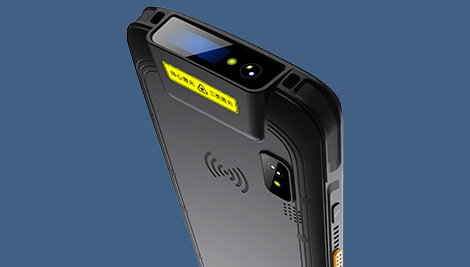
1. Dual-Mode HF/UHF RFID: The Data Collection Hub
Military RFID handhelds leverage dual-band (13.56MHz HF / 860-960MHz UHF) flexibility:
Rapid Identity Verification
Reads ID cards/residence permits via HF in 0.3 seconds. At checkpoints or patrols, officers instantly cross-reference fugitive databases while encrypted modules transmit results to command centers, slashing response times.
End-to-End Evidence Tracking
UHF enables batch reading at 20m+ ranges. In theft cases, scanning passive RFID tags reveals item trajectories with timestamps/GPS data, building court-admissible evidence chains.
2. Encrypted Dedicated Network: Secure Data Pipeline
Hardware-level encryption (SM4 national algorithm) ensures triple protection:
Channel Encryption
VPN protocols encrypt data at source, rendering intercepted packets unreadable.
Biometric Authentication
SE security chips require fingerprint + digital certificate verification to activate devices.
Resilient Transmission
Stores 5,000+ records offline, auto-syncing when networks resume.
3. Military-Grade Endurance: Conquering Extreme Environments
IP65 Rating
Survives 1.5m drops, operates at -20°C~60°C across deserts/rainforests.
10-Hour Battery
5,000mAh removable battery with smart power management.
All-Weather Display
5.5" Corning Gorilla Glass with auto-brightness and wet-touch operation.
4. Anti-Collision Algorithm: Mass Event Management
Processes 200+ tags simultaneously (700 tags/sec). At concert security checkpoints, enables 10,000-person screenings/hour while heatmaps visualize crowd density for command decisions.
5. Custom System Integration
Android OS integrates with police systems:
One-Tap Alerts
NFC writes APB instructions for cross-regional suspect tracking.
Tamper-Proof Evidence
Hash values authenticate audio/video recordings.
Smart Task Dispatch
GPS-triggered alerts assign nearby officers to incidents.
Case Study: Municipal Police Efficiency Gains
After deployment at a provincial capital:
Screening efficiency ↑67% (120 → 500 checks/officer/day)
Evidence error rate ↓3.2%→0.01%
Cross-unit response time ↓40%
Conclusion
Military RFID handhelds are revolutionizing law enforcement through precision data capture, encrypted transmission, and deep system integration. As 5G-IoT convergence advances, these terminals will become pivotal in building intelligent policing ecosystems.