
In the railway transportation sector, efficient and precise operational maintenance and asset management are core elements ensuring system safety. With the deepening application of IoT technology, RFID (Radio Frequency Identification) industrial handheld devices have emerged as critical tools for railway inspection and fixed asset inventory due to their contactless data capture, high reliability, and adaptability. This article analyzes the technical advantages and practical value of RFID industrial handheld PDAs in railway scenarios from functional perspectives.
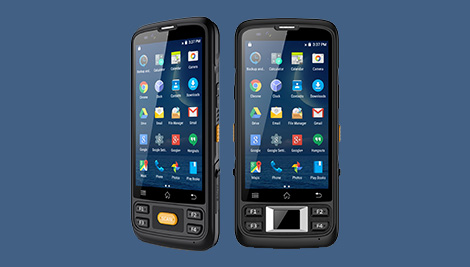
I. Railway Track Inspection: From Reactive to Proactive
Railway inspection involves periodic checks of massive infrastructure like tracks, signaling equipment, overhead lines, and vehicle components. Traditional manual methods face inefficiency, data delays, and high leakage risks. RFID handheld PDAs redefine workflows through:
1. Rapid Identification & Data Capture
Batch Tag Reading: Scan multiple RFID tags simultaneously in concentrated areas (e.g., sensors across 10+ meters of track), cutting inspection time.
Environmental Resilience: IP65+ rating ensures stable operation at -20°C to 60°C, resisting dust, vibration, and EMI.
Custom Data Templates: Pre-set thresholds (e.g., track geometry, wire tension); deviations trigger alerts.
2. Real-Time Data Transfer & Remote Management
4G/5G/Wi-Fi Multi-Mode: Upload inspection data to management platforms instantly for live monitoring.
Offline Sync: Cache data in tunnels/mountains; auto-transmit when network resumes.
Visual Documentation: Attach photos/videos to RFID tags via external cameras.
3. Route Planning & Execution Tracking
GPS/BeiDou Navigation: Optimize paths using GIS maps with voice guidance.
Geo-Fencing: Alerts if scans miss designated zones.
Closed-Loop Work Orders: Generate repair tasks directly from inspections.
II. Fixed Asset Inventory: From Manual to Smart Control
Rail systems manage 100,000+ assets (trains, communication gear, tools). RFID handhelds transform inventory via:
1. High-Speed Bulk Inventory
UHF RFID: Scan hundreds of tags/sec within 3–25m; 10x faster than barcodes (e.g., 3 days → 4 hours per station).
Anti-Collision Algorithms: Read stacked tags accurately.
Dual Online/Offline Modes: Uninterrupted operations.
2. Full Asset Lifecycle Management
Traceability: Unique RFID tags log procurement, transfer, maintenance, and disposal.
Mobile Query: Scan to retrieve specs, location, and maintenance history.
Unauthorized Movement Alerts: Notify managers of abnormal asset relocation.
3. Cross-Region Collaboration
Role-Based Permissions: Control access by station/region.
Cloud Synchronization: Share real-time inventory across units.
Auto-Discrepancy Reports: Flag surplus/deficit assets.
4. Data-Driven Decision Support
Utilization Analysis: Track idle rates for optimal allocation.
Maintenance Forecasting: Predict servicing needs via usage history.
TCO Modeling: Analyze costs across procurement, operation, and disposal.
III. Future Outlook
Integration with BIM enables 3D railway infrastructure management, while big data platforms support asset-health predictions. With 5G and edge computing, RFID handhelds will evolve into “sense-analyze-decide” tools, shifting rail operations from experience-driven to data-driven.
Conclusion
RFID industrial handheld PDAs reshape railway inspection and asset management through real-time precision and adaptability. Beyond operational efficiency, they safeguard assets, optimize resources, and enable strategic decisions—evolving into foundational infrastructure for smart railways.