
In today's rapidly evolving smart healthcare landscape, handheld PDAs have become indispensable mobile workstations for medical staff. Designed specifically for clinical environments, these professional medical PDAs are reshaping traditional nursing models through deep integration with clinical workflows. This article examines how such devices enhance medical service quality through technological innovation, focusing on three dimensions: hardware adaptability, core functionality, and scenario-based applications.
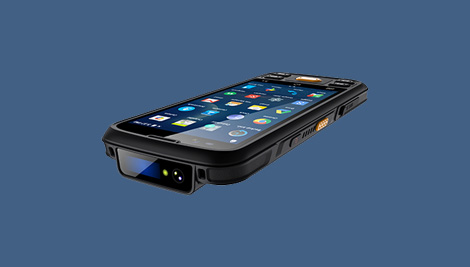
I. Medical-Grade Hardware Design: All-Weather Clinical Equipment
Ergonomic Protective Structure
Built for high-intensity clinical use, professional healthcare PDAs meet military-grade rugged standards with medical antibacterial coating. They withstand 1.5-meter drops and IP65-rated waterproof/dustproof protection. Reinforced scanner windows endure hundreds of daily alcohol disinfection cycles. Ergonomic contours with detachable straps ensure fatigue-free one-handed operation.
Display & Interaction Optimization
The 5.5-inch HD display with auto-brightness adjustment ensures clear patient data visibility even under strong light. Medical-grade antibacterial touchscreens support gloved/wet operation, preventing cross-infection. Hybrid physical/virtual button design accommodates diverse operation habits and enables blind-triggering of critical functions during emergencies.
Battery & Connectivity Stability
Hot-swappable battery compartments guarantee 24/7 continuous operation. Dual-band WiFi + 4G/5G modules ensure data transmission stability, specifically optimized for signal penetration in complex hospital environments. Integrated medical IoT protocols enable seamless interoperability with HIS, LIS, and PACS systems.
II. Core Functional Matrix: Clinical Workflow Transformation
Smart Patient Identification
High-precision 2D barcode scanners instantly capture patient wristbands, medication e-codes, and specimen labels. Built-in verification logic auto-checks patient identity, prescription details, and execution timing during medication administration, IV infusion, and blood collection, reducing human error rates below 0.01%.
Mobile Nursing Station
Dynamic Order Execution: Real-time synchronization of physician orders with priority-based task lists. Voice-to-text structured templates generate standardized nursing records.
Vital Signs Collection: Bluetooth 5.0 integration with monitors/glucometers/scales automatically stores data and generates trend analysis charts.
Closed-Loop Medication Management: Scanned e-codes verify drug name/specification/expiry, match patient prescriptions, and track individual unit-level dispensing.
Infection Control System
Consumables management monitors PPE inventory, triggering automatic replenishment when stocks (e.g., masks/gloves) fall below safety thresholds. Sealed scanning windows prevent surface contact in isolation wards.
III. Scenario-Based Applications: Full-Cycle Coverage
Outpatient Triage
In high-risk zones (e.g., fever clinics), PDA scans health codes to auto-load epidemiological questionnaires. Integrated infrared thermometers enable contactless pre-screening with symptom-based prioritization and wayfinding.
Inpatient Management
Admission: ID scanning autofills patient data, verifying insurance and processing deposits.
Rounding: Generates route plans by care level, documenting rounds/time/feedback for quality assessment.
Surgical Handover: NFC tags verify patient identity, surgical site marking, and pre-op readiness with real-time sync to anesthesia systems.
Specialty Department Solutions
Hemodialysis units: Manage vascular access types and dialysis parameters with automated ultrafiltration calculations. Neonatology: Mother-infant wristband pairing controls infant access and logs feeding/diapering details.
IV. Data Security & Compliance
Certified medical devices comply with GB/T 35273 personal data protection standards. SM4 national encryption secures data transmission with remote wipe capability. Audit trails record all operations for regulatory compliance. Dual fingerprint authentication is required for sensitive actions in psychiatric departments.
V. Future Evolution
Modular medical PDAs now integrate portable ultrasound and rapid test devices via expansion interfaces. Remote management platforms enable diagnostics, firmware updates, and app distribution, reducing IT costs. Note: While voice interface integration aligns with natural workflows, strict adherence to medical data anonymization protocols remains essential.
Conclusion
The value of professional healthcare PDAs lies not in technical specifications, but in solving clinical pain points. By integrating barcode recognition, mobile computing, and instant communication, these devices establish digital neural networks across care continuum. When innovation serves medical essence, mobile nursing achieves the leap from "recording" to "quality control," and from "execution" to "decision-making." Healthcare institutions should prioritize devices' medical compliance requirements during selection.